
 February 24, 2026
 Rahul Arora
The Strategic Imperative of AIOps: Bridging the Gap Between IT Operations and Business Outcomes
“Modern enterprise complexity has surpassed human cognitive capacity, rendering traditional monitoring obsolete. Strategic integration of AIOps transitions IT operations from reactive firefighting to predictive business enablement.
Every minute of downtime costs revenue. Every false alert drains engineering productivity. Every delay erodes customer trust. AIOps is emerging as the intelligence layer that prevents all three.”
The contemporary enterprise operates within an infrastructure ecosystem that has fundamentally outpaced human cognitive capacity for management. This phenomenon which we might term “digital entropy”, represents a critical inflection point where the volume, velocity, and complexity of operational data now exceed the analytical bandwidth of even the most sophisticated IT teams.
The core challenge facing senior technology leadership today is not merely technical sophistication but strategic misalignment. Whilst IT organisations continue to optimise for traditional metrics such as uptime and mean time to recovery, the C-suite evaluates performance through an entirely different lens: revenue velocity, customer experience continuity, and competitive positioning. This disconnect creates a dangerous vacuum where technical excellence fails to translate into commercial outcomes.
AIOps represents far more than an operational efficiency tool. It functions as a strategic translation layer that converts technical telemetry into commercial intelligence, enabling organisations to understand not simply that a system has failed, but precisely how that failure impacts customer transactions, revenue streams, and market position. This shift from reactive problem-solving to proactive business intelligence marks the essential difference between IT as a cost centre and IT as a value driver.
The Economic Cost of Operational Friction
The AIOps market is projected to reach $32.56 billion, expanding at a compound annual growth rate of 30.7% according to Research and Markets analysis. [7] This acceleration is not driven by technological novelty but by urgent economic necessity. Enterprises are witnessing exponential growth in infrastructure complexity whilst simultaneously facing relentless pressure to reduce operational costs and accelerate time-to-market.
IDC and BMC research reveals that 75% of IT alerts generated in typical enterprise environments constitute noise rather than actionable intelligence. [2] [11] [12] This signal-to-noise crisis carries profound financial implications. When operational teams spend the majority of their time investigating false positives and correlating disparate data sources, the organisation bleeds both direct costs and opportunity costs. Enterprise downtime is quantified at between $7,000 and $45,000 per minute, yet these figures capture only the immediate revenue impact. They fail to account for customer churn, brand erosion, and the compounding effects of reliability failures on market perception. [8] [13]
Research demonstrates that organisations experiencing even a 15-20% lag in delivery speeds relative to competitors face measurable market share erosion. In sectors where customer expectations have been conditioned by digital-native companies operating at unprecedented velocity, operational friction translates directly into commercial disadvantage. The question for leadership is not whether to invest in operational intelligence but whether the organisation can afford the competitive penalty of continuing with manual, reactive approaches. [14] [15] [16].
Redefining Performance: From Uptime to Business Resilience
The traditional system of reactive monitoring is characterised by threshold-based alerts and manual investigation, has reached its operational ceiling. Elite technology organisations have transitioned to proactive observability frameworks that provide contextual understanding rather than raw data streams.
DORA (DevOps Research and Assessment) metrics provide empirical evidence of this performance gap. Elite performers, representing approximately 26% of the market, achieve recovery times that are 6,570 times faster than low-performing organisations. This differential is not marginal; it represents a fundamental capability gap that directly impacts business agility and resilience. [15]
The mechanism enabling this performance advantage is automated root cause analysis powered by AIOps platforms. Traditional manual investigation processes for complex, multi-tier application failures can consume hours or days. Elite organisations leveraging deterministic AI models achieve sub-one-hour mean time to recovery (MTTR) by automatically correlating events across distributed systems, identifying causal relationships, and prescribing remediation actions. Research indicates that mature AIOps implementations deliver 85-93% reduction in time required for root cause analysis, transforming what was previously a labour-intensive investigation into an automated diagnostic process. [6]
Quinnox research demonstrates that predictive analytics capabilities within AIOps frameworks enable 20-40% reduction in unplanned downtime. [8] By identifying patterns that precede failure events, such as memory leaks, capacity saturation, or configuration drift, organisations shift from reactive response to predictive intervention. This capability is particularly critical in sectors where service availability directly determines revenue generation, such as financial services, e-commerce, and telecommunications.

The Architecture of Intelligence: Solving the Data Fragmentation Crisis
Integrate.io research reveals that 89% of enterprises struggle with multi-cloud data fragmentation, creating operational blind spots that undermine both reliability and security postures. Modern applications span public Cloud infrastructure, private data centres, software-as-a-service platforms, and edge computing environments. Each domain generates telemetry in proprietary formats, creating data silos that prevent holistic system understanding. [10] [17]
The architectural distinction between probabilistic and deterministic AI models becomes critical in this context. Probabilistic approaches, which identify correlations based on pattern matching, provide limited value to executive leadership because they offer probabilities rather than certainties. When a revenue-critical application experiences degradation, the C-suite requires definitive answers about causation, business impact, and remediation timeline.
Leading AIOps platforms now leverage deterministic topology-aware models. By constructing a unified graph of all system relationships from infrastructure through application tiers to business transactions deterministic AI can trace causal chains with precision. This approach provides the “single source of truth” that executive leadership requires for decision-making under pressure. [3]
What AIOps Delivers,
- a) 40% reduction in downtime risk
- b) 80% alert noise reduction
- c) 85-90% faster root cause analysis
- d) 30% productivity improvement
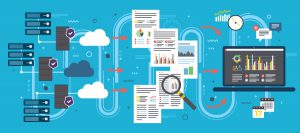
The unified data fabric concept addresses this fragmentation through data-agnostic integration. Rather than forcing operational data into rigid schemas, modern AIOps platforms ingest telemetry from heterogeneous sources whilst preserving contextual relationships. This enables the AI to observe complete customer journeys across technology domains, identifying how a database query slowdown in one Cloud region impacts checkout completion rates in a specific geographic market.
Real-World Examples for ROI and Operational Gains
Forrester Total Economic Impact analysis indicates that mature AIOps implementations deliver 157% return on investment over a three-year period. [12] This ROI derives from multiple value streams: reduced downtime costs, improved engineering productivity, faster time-to-market for new capabilities, and enhanced customer experience metrics that drive revenue growth.
A global tier-one banking institution provides concrete illustration of these outcomes. Facing high incident volume impacting digital banking applications, the organisation implemented an enterprise AIOps platform integrated across its hybrid infrastructure. The results demonstrate both cost reduction and capability enhancement. Similarly, an organisation achieved $5.84 million in annual savings through reduction of labour hours spent on alert triage and investigation. Noise reduction algorithms eliminated the 80%+ of alerts that previously consumed engineering attention without yielding actionable insights. [12]
More significantly from a business perspective, the bank reduced resolution time for priority-one incidents by 40%. [12] [18] In the banking sector, where digital channel availability directly determines customer retention and competitive positioning, this improvement translates into measurable revenue protection. Each hour of downtime for core banking services represents not only lost transaction revenue but potential customer defection to competitors offering superior reliability.
OpsRamp and EMA research quantifies broader operational efficiency gains, documenting 30% improvement in net productivity for engineering teams and 40-60% reduction in manual “toil”, the repetitive, low-value tasks that create burnout and attrition amongst senior technical talent. In a market where architectural and site reliability engineering skills command premium compensation, this efficiency gain carries dual benefits. Organisations reduce operational costs whilst simultaneously improving retention of critical talent by eliminating the frustrating manual work that drives experienced engineers to seek opportunities elsewhere. [11] [19]
The Coming Years Roadmap for Tech Leaders
Forward-looking technology leadership must reframe AIOps implementation not as a monitoring upgrade but as strategic infrastructure for business alignment. This requires mapping IT telemetry to business key performance indicators with precision. A server experiencing CPU saturation is a technical metric; understanding that this saturation correlates with a 12% increase in checkout abandonment represents business intelligence that informs investment priorities and risk management. [21]
Observability-driven development represents the next maturity stage beyond DevOps. Rather than treating reliability as a post-deployment concern, elite engineering organisations embed observability instrumentation during application design. This shift enables teams to understand system behaviour under load, identify performance bottlenecks before they impact customers, and build resilience into architecture rather than attempting to retrofit it through operational heroics.
The global technology skills shortage, particularly acute in site reliability engineering, Cloud architecture, and security operations creates an imperative for capability augmentation rather than headcount expansion. AIOps platforms that automate tier-one and tier-two operational tasks enable existing teams to focus expertise on strategic initiatives rather than routine incident response. This augmentation model addresses the talent constraint whilst improving job satisfaction and retention.

Practical Roadmap for Senior Leadership
Translating intelligence layer concepts into organisational reality requires systematic implementation that balances strategic vision with pragmatic execution. A phased approach enables learning, demonstrates value incrementally, and builds organisational capability progressively.
Executive alignment establishes the foundation, ensuring that AI investments connect to articulated business outcomes rather than pursuing technology for its own sake. Leadership teams should define specific objectives such as revenue growth through personalisation, operational cost reduction through process automation, or customer experience improvement through predictive service. These objectives guide prioritisation decisions and provide accountability for investment returns. Business outcomes must translate into measurable success criteria that technology teams can target, and stakeholders can evaluate objectively.
Data asset audit and prioritisation follow, cataloguing existing information assets, assessing quality and accessibility, and identifying datasets most valuable for initial AI applications. This inventory reveals data gaps, quality issues, and integration requirements that must be addressed before effective model development. Prioritisation should favour datasets supporting high-value use cases where business impact can be demonstrated rapidly, building momentum and justifying continued investment.
Pilot initiatives test the intelligence layer with contained scope and clear success metrics, enabling organisations to validate technical approaches and operating practices before broader rollout. Effective pilots select use cases with genuine business value, manageable technical complexity, and stakeholder engagement that ensures findings influence subsequent decisions. The Google Cloud AI strategy playbook emphasises measuring pilot performance against both technical metrics (model accuracy, inference latency, infrastructure cost) and business outcomes (process efficiency, decision quality, revenue impact), establishing measurement patterns that persist through scaling phases.
Platform and MLOps infrastructure buildout occur iteratively, expanding capabilities based on lessons from pilot implementations rather than attempting comprehensive design upfront. Initial investments typically address data access and quality, basic model development environments, and simplified deployment pipelines. Subsequent iterations add sophisticated capabilities such as automated retraining, A/B testing frameworks, and comprehensive observability as use cases mature, and operational requirements become clear.
Scaling with governance requires balancing enablement and control, expanding AI adoption whilst managing risk through appropriate oversight. Governance frameworks mature alongside technical capabilities, introducing responsible AI checks, model risk management processes, and compliance validation as applications address more sensitive use cases. Platform teams provide self-service tooling that embeds governance requirements into standard workflows, making compliance the path of least resistance rather than imposing bureaucratic overhead.
Measurement and iteration close the loop, using performance data to refine approaches and adjust priorities. Regular review forums examine technical metrics, business outcomes, and operational indicators, identifying successful patterns worth codifying and problematic trends requiring intervention. This disciplined measurement culture distinguishes organisations that extract sustained value from AI investments from those where initiatives fail to progress beyond pilots. The Kanerika Cloud transformation framework emphasises that migration sequencing should reflect business priority rather than technical convenience, ensuring that intelligence layer capabilities support the most valuable applications first. [5] [8] [10]
Conclusion
AIOps represents the essential bridge enabling IT organisations to communicate in the language of the boardroom. By translating technical metrics into business outcomes, it transforms IT from a necessary cost into a strategic differentiator that drives competitive advantage.
Motherson Technology Services approaches this transformation through three integrated capabilities. Contextual intelligence leverages deterministic AI models and unified data fabrics to provide clients with predictive command centres that anticipate business impact before customers experience service degradation. Rather than reacting to outages, organisations gain the foresight to prevent revenue-impacting incidents through predictive intervention.
The transition from service level agreements to experience level agreements represents a fundamental reorientation of IT performance metrics. Traditional SLAs measure technical compliance; experience level agreements ensure that IT performance directly mirrors customer satisfaction and revenue generation. This alignment means that operational investments are justified through business value creation rather than technical necessity.
Futureproofing requires integration of Gartner-recognised observability frameworks that enable organisations to transition from cost centres to value-driven entities. In an increasingly volatile global market characterised by supply chain disruption, cyber threats, and rapid competitive shifts, operational resilience becomes a strategic imperative rather than a technical concern.
The organisations that will lead the next decade are not those that manage complexity, but those that eliminate it through intelligence. The question is no longer whether AIOps is needed. The question is whether your operations are ready to compete at algorithmic speed. In a digital economy defined by speed and resilience, operational intelligence is no longer optional, it is competitive survival.
References
[3] https://www.dynatrace.com/resources/ebooks/aiops-strategy/
[4] https://www.liveaction.com/wp-content/uploads/2021/05/EMA-AIOps-RR-LiveAction.pdf
[5] https://www.logicmonitor.com/resources/aiops-for-monitoring
[6] https://www.opsramp.com/wp-content/uploads/2022/07/The-OpsRamp-State-of-AIOps-Report.pdf
[7] https://www.researchandmarkets.com/reports/5767606/aiops-market-report
[9] https://2025.aksi.co/aiops-gartner-magic-quadrant-2025/
[10] https://www.integrate.io/blog/data-integration-adoption-rates-enterprises/
[11] https://www.opsramp.com/wp-content/uploads/2022/07/The-OpsRamp-State-of-AIOps-Report.pdf
[13] https://www.brighttalk.com/resource/core/441739/ebook-aiops-maturity-guide-2_943354.pdf
[14] https://cloud.google.com/resources/state-of-devops
[15] https://dora.dev/research/2021/dora-report/2021-dora-accelerate-state-of-devops-report.pdf
[16] https://about.gitlab.com/blog/how-to-make-your-devops-team-elite-performers/
[18] https://sciencelogic.com/wp-content/uploads/2021/04/forrester-tei.pdf
[19] https://www.bigpanda.io/wp-content/uploads/2024/12/analyst-report-ema-aiops-in-itsm.pdf
[20] https://oddjar.com/woocommerce-checkout-optimization-guide-2025/
About the Author:

Rahul Arora
Practice Head – DevOps
Motherson Technology Services
Rahul spearheads Motherson’s global Cloud DevOps initiatives, driving large-scale transformations for enterprises across industries. With deep expertise across AWS, Azure, and multi-cloud ecosystems, he has led mission-critical programs in migration, automation, DevSecOps, and cost optimization, ensuring resilience and efficiency at scale.
A passionate technologist with a strong techno-managerial edge, Rahul blends hands-on engineering depth with strategic leadership. He has been instrumental in shaping AI-driven DevOps automation frameworks and enterprise-grade compliance solutions, consistently bridging technology execution with boardroom priorities to maximize customer value.